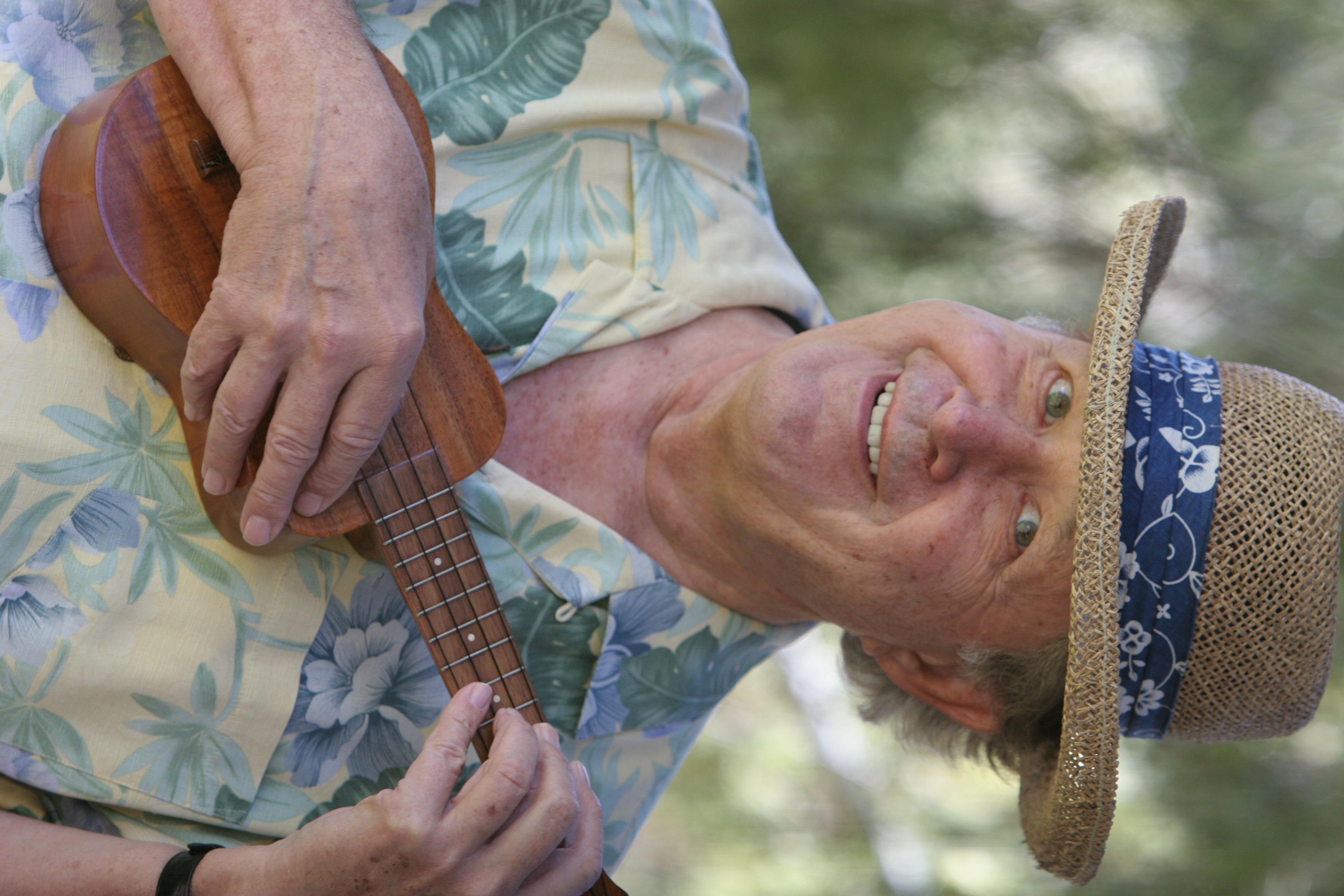
Born Lauren Elton Ekroth in Superior, Wisconsin, in 1935, Loren Ekroth grew up the son of a county sheriff and the grandson of a Swedish immigrant killed on the Lake Superior ore docks. He left home for the University of Minnesota, was drafted into the Army, taught his way across four continents for the University of Maryland, and earned what may have been the first doctorate in intercultural communication ever granted.
He spent twenty-three years as a professor of speech at the University of Hawaiʻi, wrote 120 newspaper columns on how people relate to one another, and then, at sixty-seven, started a weekly newsletter that ran for thirteen years, reached seven thousand subscribers in eighty-one countries, and produced 720 essays on the craft of conversation. He called himself “Dr. Conversation.” He traveled to eighty-five countries and lived in eleven. He died on March 31, 2026, in Scottsdale, Arizona, at ninety-one, still writing, still teaching, still convinced that the quality of our conversations shapes the quality of our lives.
A Life
Superior, Wisconsin
Loren was born on January 14, 1935, in Superior, Wisconsin — a port city on the western tip of Lake Superior where ore boats lined the docks and Swedish was still heard in kitchens. His father, Elton Ekroth, was the sheriff of Douglas County, elected by a margin of three votes after a recount of fifteen thousand ballots. His grandfather Olaf, a Swedish immigrant, had been killed in an accident on the ore docks when Elton was three. His mother, also Swedish, had immigrated to the United States at thirteen during World War I and been bullied in high school for her accent. The family attended First Covenant Church, a Swedish Evangelical congregation that still held parallel Swedish and English services for the two generations.
Loren grew up trailing his father on visits to elderly Swedish widows — bringing medicine, fixing furnaces, listening — and dodging schoolyard fights that came with being the sheriff’s kid. He had a sister, Cynthia, and two younger siblings, David and Marlene. He survived a skull fracture, three broken collarbones, a choking episode, and rheumatic fever, each time saved by his father’s quick action. He took piano lessons from Clare O’Cordan and performed recitations and songs at church and lodge events from the age of three. Elton Ekroth died in 1957, at fifty. Loren never missed an election afterward.
At Superior State College he discovered theater, playing Marchbanks in Shaw’s Candida, the Witch Boy in Dark of the Moon, and directing two original one-act plays as a sophomore. He transferred to the University of Minnesota and earned a bachelor’s degree in English and theater arts in 1956 and a master’s in communication studies in 1958. In the summers he worked the kitchen of an ore boat out of Green Bay — peeling potatoes, swabbing the galley, the kind of work his father had taken over when Loren went back to school. After a year teaching high school in a Minneapolis suburb, he was drafted into the Army.
The Army and the wider world
Loren was stationed at a missile base near Vicenza, Italy, where the base education director reviewed his master’s degree and recruited him to teach university classes for the University of Maryland’s overseas program. His first class had twenty students; the highest-ranking was a lieutenant colonel who was also his commanding officer by day — a PFC tutoring his boss, which amused him for the rest of his life. He learned Italian from his military counterparts and never lost the habit of picking up languages wherever he landed.
After discharge he continued with the University of Maryland University College (UMUC) across four European countries and two Muslim countries in four years: Wheelus Air Force Base in Tripoli, Libya; West Berlin, where he was living when the Wall went up in 1961; Zaragoza, Spain; Peshawar, West Pakistan; and postings in France, Germany, and Italy. He taught public speaking, English composition, and American literature. In Peshawar he began writing his doctoral dissertation longhand in a house with unreliable electricity. In 1966 he conducted intercultural research in Bogotá, Colombia. By the time he was done, he had lived in eleven countries and would eventually visit eighty-five.
A degree that didn’t exist yet
While teaching in Peshawar, Loren wrote to communication departments at major universities asking if he could study intercultural communication. He got one reply — from his former department chairman at Minnesota, who wrote: “We don’t have a program like that here, but if you come back here to study, you and I will make one up.” They did. The doctorate he earned in 1967 was, by his own account, the first ever granted in the field of intercultural communication at any research university in the world. The program they improvised together went on to produce eighty to one hundred Ph.D.s over the next two decades. The field he helped name now has programs on every continent.
Hawaiʻi: professor, columnist, institution builder
In 1967 Loren joined the University of Hawaiʻi at Mānoa as a professor of speech, and he stayed for twenty-three years. By 1972 he was leading public speaking workshops for the American Association of University Women — “At Ease With Public Speaking; or How to Stop Shaking and Enjoy Yourself” — and teaching far beyond his department. He earned a Diplomate in Counseling Psychology after four years of advanced training at the Psychosynthesis Institute of California, and by 1979 was teaching Psychosynthesis courses at UH: guided imagery, meditation, personality integration, the discovery of will. He trained with Thomas Leonard at Coachville, one of the founding programs of the modern coaching movement, and built institutions on the islands: the Natural Learning Center of Hawaii, a personal-development training organization, and Kamaʻaina Fundraisers, which served nonprofits across Hawaiʻi.
His son, Aaron David Ekroth, was born on January 8, 1979, in Honolulu. The birth announcement ran in the Evening Telegram back in Superior — “formerly of Douglas County, Wis.” — because the family had never quite left.
In 1987 he created Teaching Excellence, a monthly essay series distributed during the academic year to one hundred thousand university faculty across North America. It ran for three years and reached more readers than many journals manage in a lifetime. From 1992 to 2000, as part of a rotating team of counselors from the Unity Counseling Center, he wrote 120 Sunday columns for the Honolulu Advertiser on interpersonal communication and relationships — including a Father’s Day column addressed to his own dead father that remains one of the most revealing things he ever published.
Better Conversations and a global readership
In 2002, at sixty-seven, Loren launched Better Conversations, a free weekly newsletter on the craft of conversation. Over thirteen years he wrote 720 essays. The subscriber list grew to seven thousand readers in eighty-one countries. Readers wrote back from Nairobi, Auckland, and towns they had to name twice. He published companion e-books, spoke at conferences, and in 2002 founded Better Conversation Week, celebrated annually during the week of Thanksgiving — his most concrete act of faith in a simple idea: that if we paid closer attention, for one week, to how we listened and what we said, the rest of the year could be different. Many of those essays now live in this archive, and some of the best are gathered below.
He did not call himself retired. He was, he said, “pro-tired” — in favor of being tired, because it meant he was still working.
A last chapter
Loren relocated to Las Vegas by the fall of 2013. In his late seventies he enrolled as a journalism student at UNLV, mentored small-business owners through SCORE, and joined Powerhouse Pros Toastmasters — one of fifty-one clubs in the Las Vegas Valley. In 2018 he appeared on Carol Koby’s All About Living radio show to talk about overcoming hesitation in social situations. He kept writing. He kept teaching.
He is survived by his son, Aaron David Ekroth; Aaron’s partner, Stacey Bearden; and his grandson, Anders. He died on March 31, 2026, in Scottsdale, Arizona, at the age of ninety-one. Better Conversation Week is still celebrated, and the invitation still stands.